Projects · Selected stories

Making progress through uncertainty.

Two manufacturing stories about understanding the problem, working across borders, and building a result that lasts.

From a recurring defect to a lasting improvement.

My role · Engineering project lead

A manufacturing defect had resisted years of troubleshooting. Earlier actions had not produced a lasting result, and travel restrictions made collaboration across sites even harder. I led the engineering team responsible for understanding the problem and turning its findings into a sustainable improvement.

Before changing the process, we had to make sure we were solving the right problem.

Understand the problem

I enjoy root cause analysis: understanding why a problem occurs, then asking what would prevent it from returning. I consider individual actions and the wider system. In this case, we separated process variation from measurement error. We mapped possible causes into a hypothesis tree and planned how to test each one, using data, process knowledge, and experiments. That clearer understanding gave us a stronger basis for deciding what to change.

Reduce the noise

Objective information gives people a common basis for decisions and communication. I plan changes carefully, checking risks before acting on a running line. In this project, we turned verified findings into standard procedures, helped teams return to a shared operating standard, and monitored key process inputs and defect results. I value documentation as a living system: focused on what people need, practical to use and maintain, and updated as the work changes.

Improve together

With onsite support restricted, I used remote workshops and shared reviews to align teams on the evidence, risks, and priorities. We adapted deployment to local constraints and connected onsite teams with remote experts. I seek solutions that benefit everyone involved by understanding different perspectives and finding shared goals across functions. Trust and enthusiasm guide how I build that cooperation. Shared ownership helped us keep improving across sites.

What changed

The team improved defect performance across multiple sites and sustained the new baseline beyond the immediate recovery. The work created a repeatable control and improvement system for future challenges.

What I enjoy in technical management and team leadership is helping people turn evidence into lasting improvement.
Starting a new line when the answer is still taking shape.

My role · Forming-process startup lead

A new production line had to become ready for shipment under a demanding deadline. Information was incomplete, and a multinational team brought different languages, experience levels, and decision habits. As the forming-process startup lead, I focused on how we made decisions, combined our strengths, and responded when the plan met reality.

Progress depended on making uncertainty visible—and helping different people work through it together.

Make decisions transparent

Waiting for complete information would delay progress; moving too quickly would create risk. I used a shared coordination hub to make assumptions, risks, decision criteria, and priorities visible. This gave the teams a common basis for judging trade-offs and deciding what to do next, even when the answers were incomplete.

Bring complementary strengths together

I formed working groups that paired international and local colleagues, experienced and newer team members, and people focused on data with those closest to the production floor. Their different perspectives became complementary strengths. This helped technical understanding and practical experience travel together, improving communication and the team's ability to act.

Adapt around the bottleneck

As customer needs and field conditions changed, I adjusted the strategy and priorities instead of treating the original plan as fixed. We focused first on the issues holding back overall progress. This kept the team's effort connected to the delivery milestone and allowed new observations to shape the next decision.

What changed

The team completed the forming-process startup on schedule and met the required output and qualification standards. The working approach became a reference for subsequent production lines.

What stayed with me: uncertainty becomes easier to manage when decisions are visible, strengths are combined, and priorities can change.

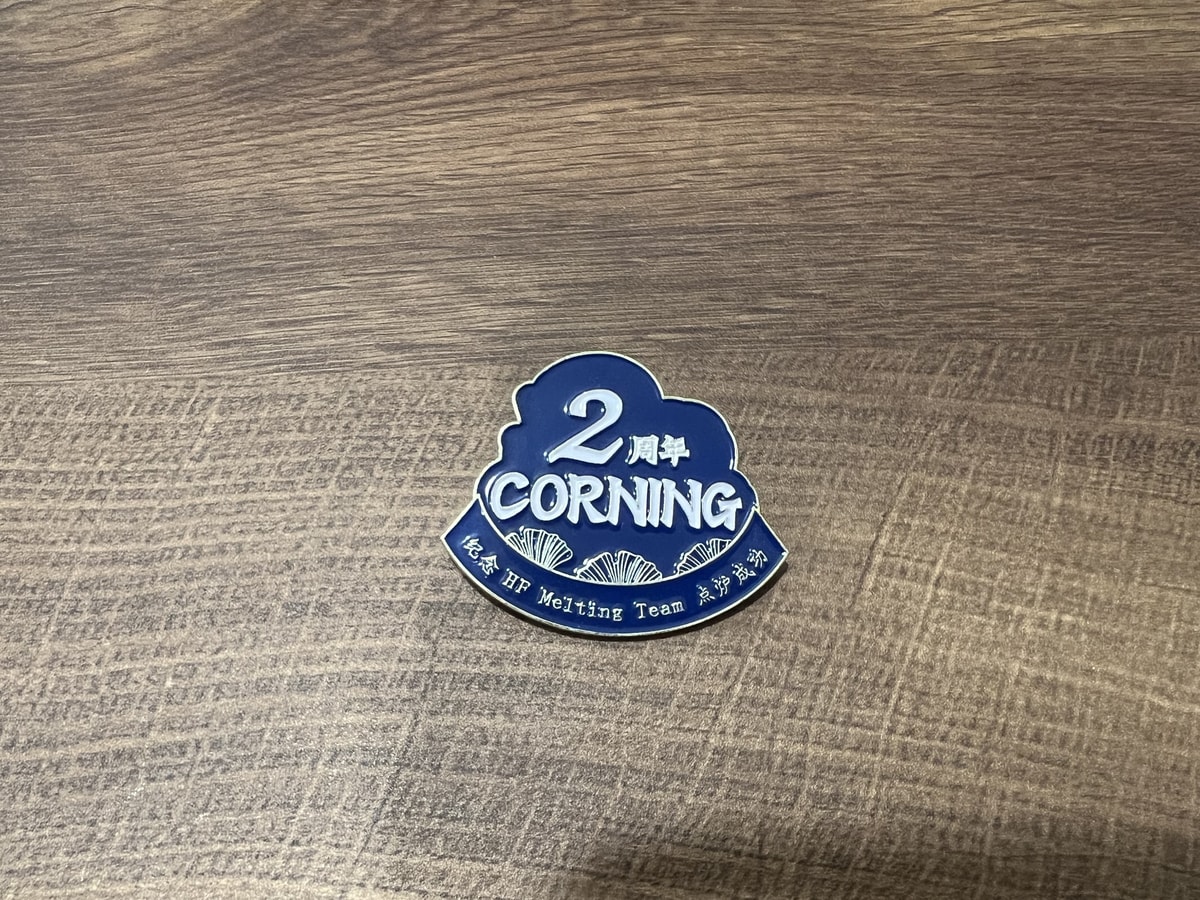
A blue Corning two-year commemorative badge for the HF Melting Team, photographed on a wooden surface.
A team commemorative badge, received in 2019.